The Herbalist's Observation: What Two Decades of Watching Nature Taught Me About Healing
A naturalist watches the forest before naming it. She studies patterns over time. Perhaps the herbalist is no different.
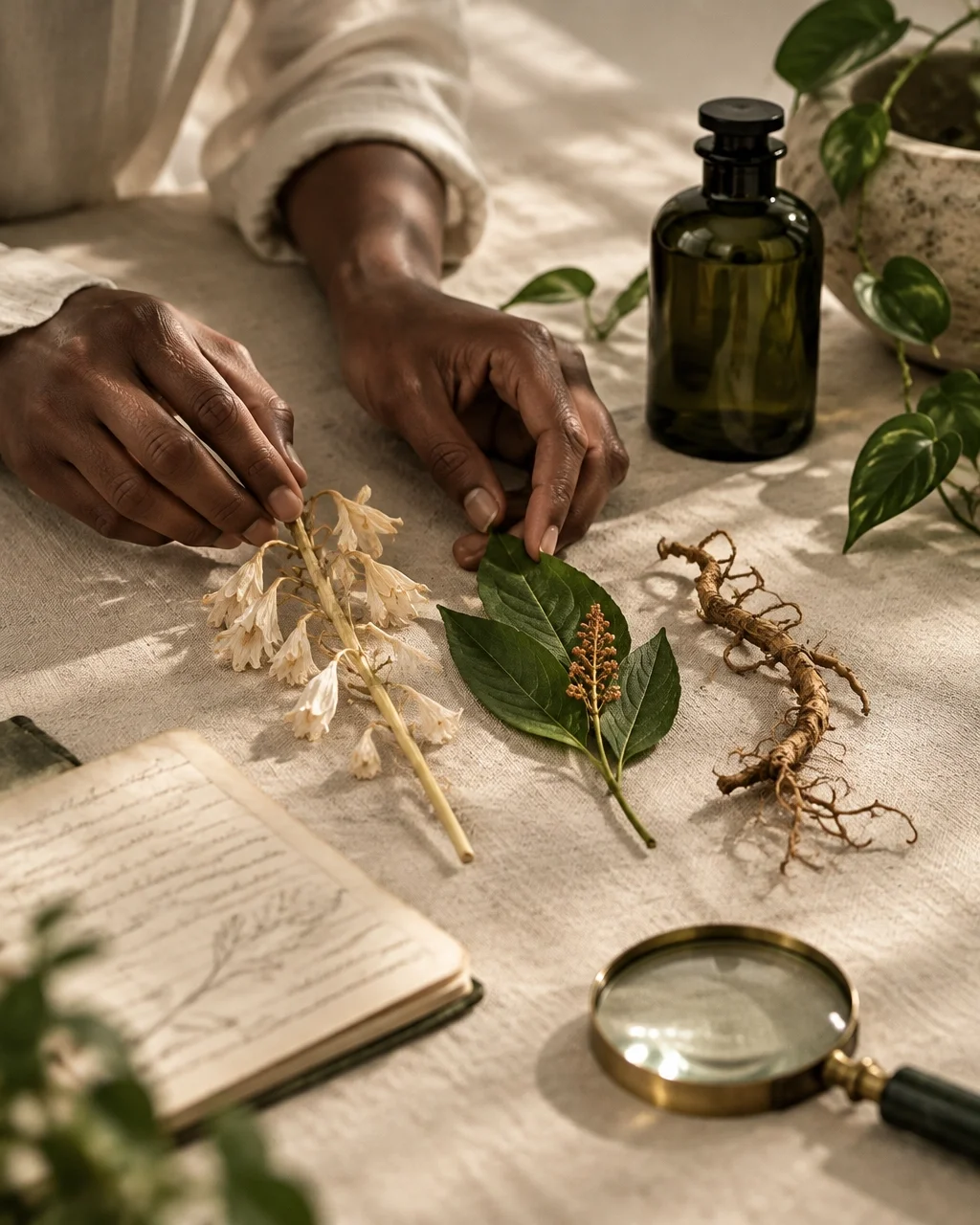
There is a particular kind of attention required to work with plants. Not hurried attention. The attention of a naturalist. A naturalist watches the forest before naming it. She notices which plants thrive at the edge of water, which close their flowers before rain, and which return after a season of disturbance. She studies patterns over time.
Clinical herbalism asks for the same discipline.
“The body is not a machine with one loose part. It is an ecosystem.”
Hormones, sleep, stress, digestion, mood, circulation, and reproductive health move in relationship with one another. When one rhythm changes, others often respond. This is the foundation of pattern-based medicine: observing the whole landscape before selecting the plant.
THE BODY SPEAKS IN PATTERNSLet’s look at hormone balance as an example. It is often described as if it were a fixed destination. In practice, it is more dynamic.
The menstrual cycle changes across the lifespan. PMS may bring irritability, pain, insomnia, or mood shifts. Perimenopause may introduce irregular cycles, temperature changes, fatigue, anxiety, or altered sleep. Menopause marks another transition entirely. These experiences are real. They are also individual.
One person may notice that poor sleep arrives before every cycle. Another may observe that stress intensifies hot flashes. Someone else may experience mood changes alongside changes in digestion, appetite, or energy.
OBSERVATION BEFORE FORMULATIONThe first observation is not always the symptom itself. It may be the relationship between symptoms.
For more than two decades, TAO + SALOMA has approached botanical formulation through education, clinical research, natural product development, and direct observation.
This work begins with questions.
What does the symptom pattern reveal?
Which systems appear to be under strain?
What changes when sleep improves?
What happens when stress becomes more manageable?
Which signs are consistent?
Which are seasonal, cyclical, or situational?
Intuition has a place here. Not as guesswork, but intuition refined by experience. A skilled herbalist develops a kind of pattern recognition. The person becomes familiar without becoming predictable. The plant becomes known without becoming reduced to a single action.
This is the meeting point of traditional plant wisdom and contemporary clinical thinking. Clinical herbalism does not require choosing between ancient knowledge and modern research. It simply asks us to hold both carefully.
A MORE CONSCIOUS WAY FORWARDThe modern self-healer is not passive. She notices. She asks better questions. She learns the language of her own body. She understands that transformation may arrive through repeated, quiet acts of support rather than one dramatic intervention.
This is the way of the naturalist.
Observe first.
Formulate with care.
Track the response.
Adjust with humility.
At TAO + SALOMA, the work of botanical formulation is grounded in this exchange between plants and people. Ancient wisdom informs the ritual. Clinical research strengthens the method. Experience reveals the patterns.
And the body remains the most important teacher.
BEGIN WITH YOUR OWN FIELD NOTESStart with a simple record for two to four weeks and note:
Sleep quality
Mood and emotional steadiness
Cycle timing and flow, if applicable
Hot flashes or night sweats
Energy levels
Digestive changes
Stress and recovery
Pain or physical discomfort
Look for relationships, not perfection. Then explore one of our formulas as part of an intentional herbal wellness routine.
A plant is not merely an ingredient. It is a relationship.
A signal.
A possibility.
And sometimes, the beginning of a higher state of health.